#HerStories Vol. 2 from the Mediterranean Women Mediators Network
Listen to the new podcast series from the Mediterranean Women Mediators Network (MWMN), an initiative launched by Istituto Affari Internazionali (IAI), the Italian Ministry of Foreign Affairs and WIIS Italy.
Women continue to play a vital role in peacebuilding, mediation and conflict prevention, yet their experiences, expertise and achievements often remain underrepresented in public discourse. Building on the success of its first season, #HerStories returns with a second edition dedicated to amplifying the voices of women peacebuilders from across the Mediterranean region and beyond.
Hosted by Magda Zenon, Cypriot member of the Mediterranean Women Mediators Network (MWMN), this podcast series features conversations recorded throughout 2025 with women mediators, peacebuilders and experts working at the forefront of dialogue, conflict resolution and inclusive peace processes.
Through personal stories, professional reflections and lessons learned from the field, each episode explores the challenges, opportunities and impact of women’s leadership in peacebuilding. By sharing these experiences, #HerStories seeks to foster greater awareness of the Women, Peace and Security agenda and to highlight the indispensable contribution of women to building more peaceful, inclusive and resilient societies.
TRAILER: #HerStories from the Mediterranean Women Mediators Network
Listen to the episodes
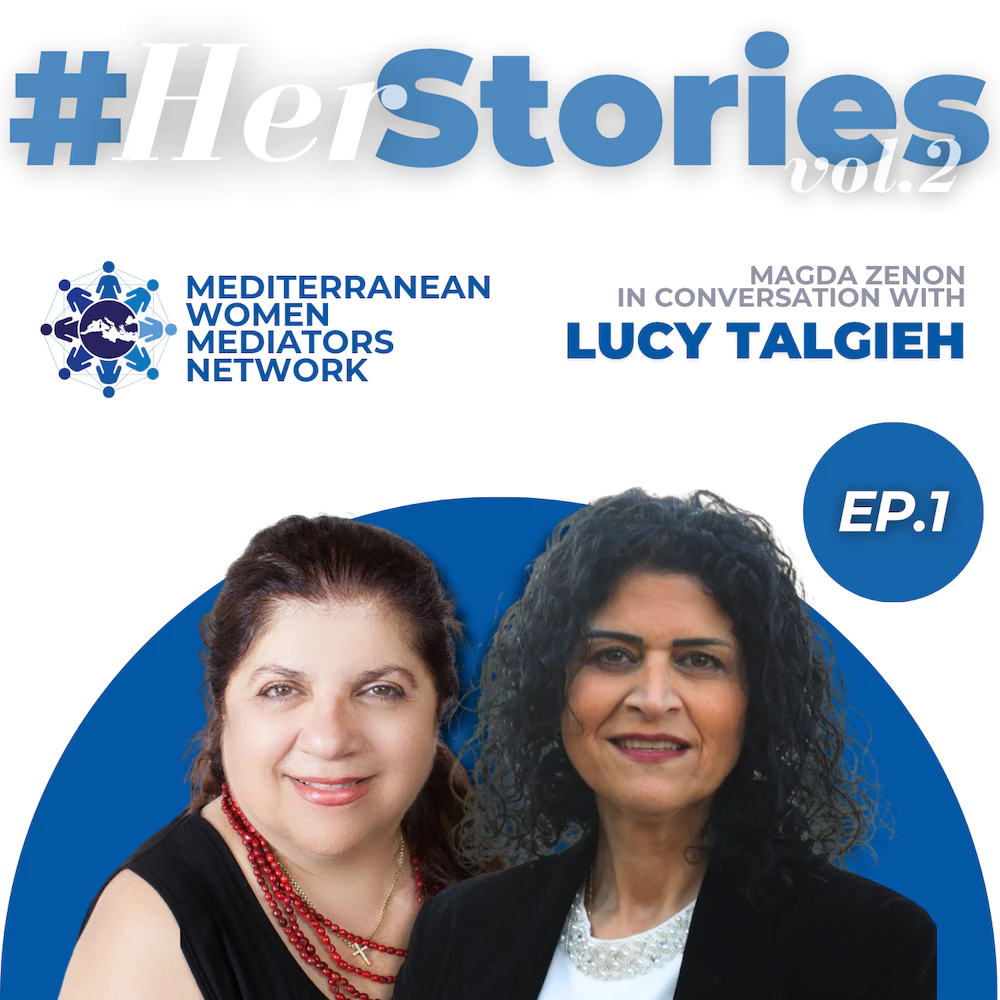
Vol. 2 – Episode 1: Lucy Talgieh – Mediation, trauma and everyday realities of peacebuilding in Palestine
In the first episode of the new podcast series #HerStories2, Lucy Talgieh shares her experience as a mediator in Palestine and Deputy Mayor of Bethlehem. Drawing on her work in a highly complex and protracted context, Lucy reflects on the realities of living and working in the West Bank, and how these conditions shape both conflict dynamics and peacebuilding efforts.
She underscores that mediation cannot rely on a one-size-fits-all approach, but must be carefully adapted to each context, combining different practices in dialogue and negotiation. From grassroots engagement with communities and women, to addressing the impact of trauma and structural constraints, Lucy offers a grounded perspective on the challenges and opportunities of fostering inclusive and sustainable peace.
She reflects on the role of women mediators in conflict prevention and resolution, and shares her perspective on the importance of inclusive peace processes, cross-border cooperation and strengthening women’s participation in decision-making spaces.

Vol. 2 – Episode 3: Lea Baroudi – Emotions, trust and transforming conflict
In the third episode of the #HerStories2 podcast series, Lea Baroudi shares insights from her work as a mediator, psychologist and founder of the Lebanese NGO March. Drawing on more than a decade of experience in sectarian conflict resolution and deradicalisation in northern Lebanon, she reflects on the human dimensions of mediation and the role emotions play in shaping conflict and peacebuilding.
She discusses her work bringing together young fighters from opposing communities through a theatre initiative that evolved into a long-term reintegration programme, challenging traditional approaches to conflict resolution by placing trust, empathy and human connection at the centre of the mediation process. Reflecting on her professional journey, Lea also explores the importance of listening without judgement, creating safe spaces for dialogue and approaching conflict with curiosity rather than assumptions.
She further reflects on the role of women in mediation, explaining how navigating male-dominated environments has shaped her practice and highlighting the distinctive contribution women can make in building trust, fostering dialogue and supporting more inclusive and sustainable peace processes.
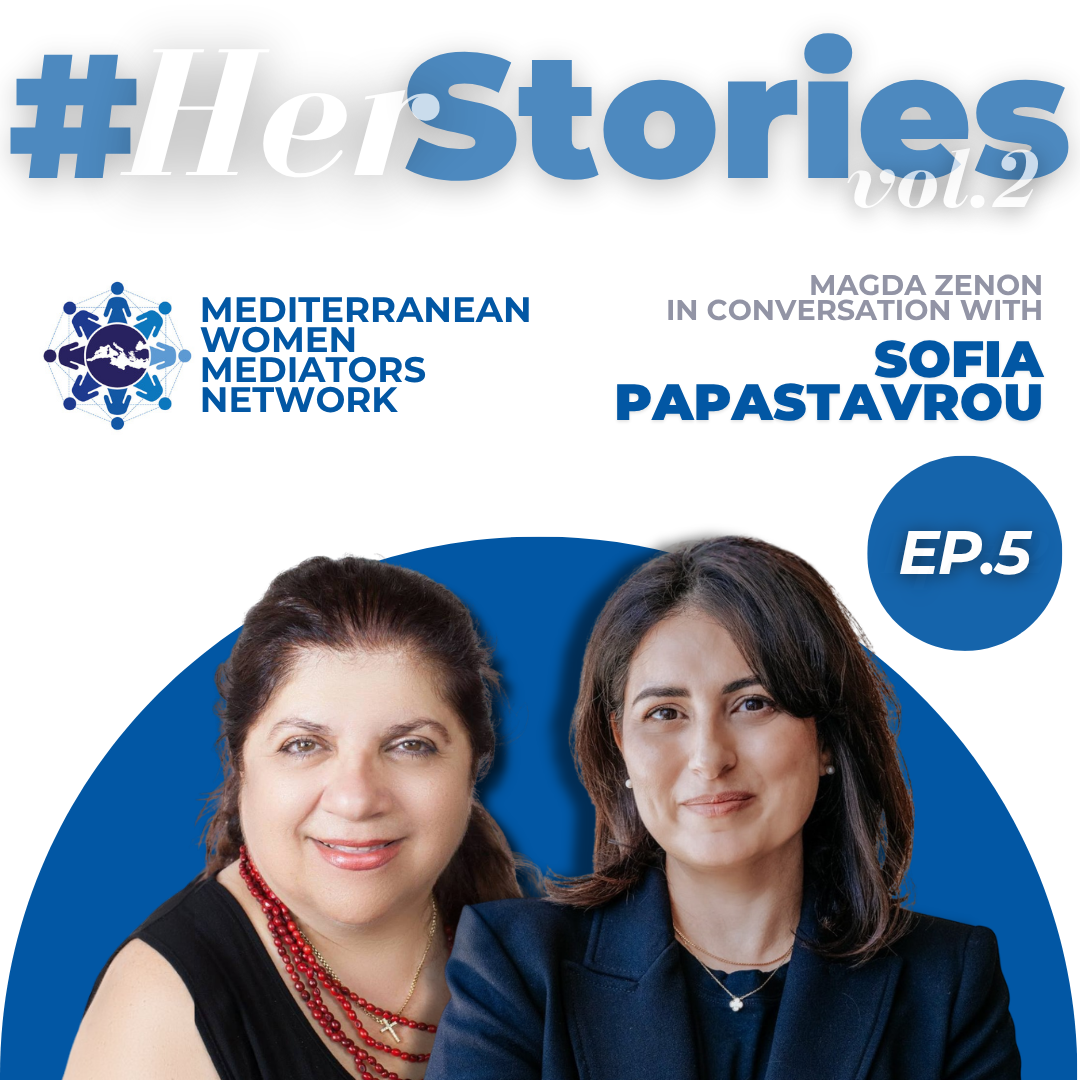
Vol. 2 – Episode 5: Sofia Papastavrou – Climate, inclusion and resilience
In the fifth episode of the #HerStories2 podcast series, Sofia Papastavrou, Gender Specialist at World Vision Canada and member of both the Women, Peace and Security Network of Canada and the Mediterranean Women Mediators Network, reflects on the increasingly interconnected challenges of peacebuilding, climate change and humanitarian action. Drawing on her experience working across fragile and conflict-affected contexts, she explores how environmental pressures, shrinking civic space and gender inequality are reshaping today’s peace and security landscape.
Drawing on examples from Somalia, South Sudan, Bangladesh and Mozambique, Sofia discusses why peacebuilding can no longer be pursued in isolation. She argues that humanitarian action, climate resilience and mediation must reinforce one another to address the complex realities facing communities affected by conflict, particularly as women are often the first to experience the impacts of climate insecurity while remaining excluded from formal decision-making processes.
The conversation further explores the role of women mediators at a time of growing authoritarianism and shrinking civic space. Reflecting on the barriers that continue to limit women’s participation in formal peace processes, Sofia highlights the need to move beyond tokenistic inclusion and recognise women as essential leaders in shaping more inclusive, resilient and sustainable approaches to peacebuilding.
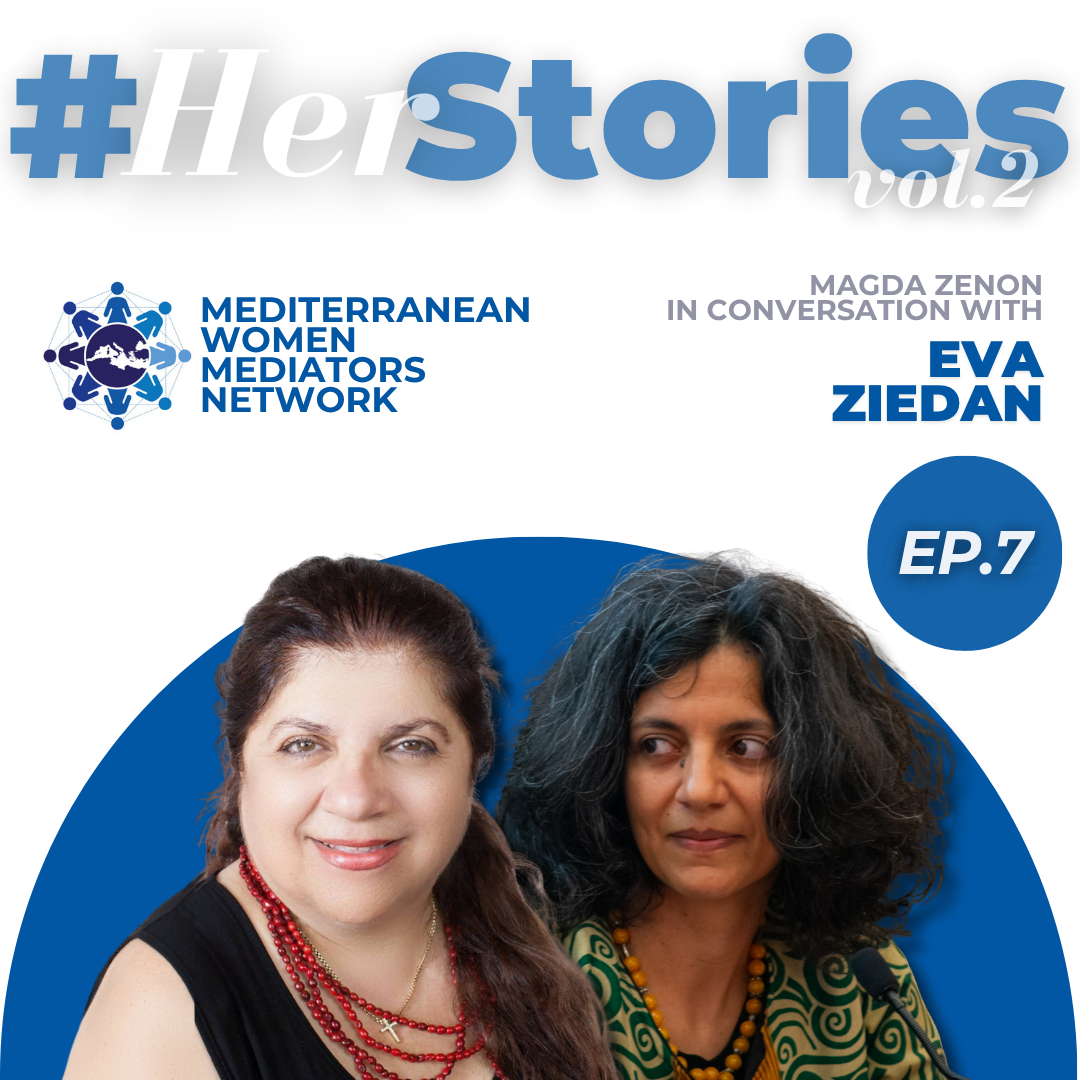
Vol. 2 – Episode 7: Eva Ziedan – Heritage, memory and reconciliation in Syria
In the seventh episode of the #HerStories2 podcast series, Eva Ziedan, Syrian cultural heritage and community development expert and member of the Mediterranean Women Mediators Network, reflects on how living cultural heritage can serve as a tool for dialogue, mediation and peacebuilding at a critical moment for Syria. Drawing on her experience working with communities across the country, she explores how heritage can offer a space to question identities, including gender roles, and build a more inclusive vision of citizenship and belonging.
Drawing on her work with communities divided by war, Eva discusses the role of shared cultural practices in rebuilding trust between them, from the revival of a traditional rain-invocation ritual across villages in Daraa and Suwayda to the efforts of women facilitators bridging political and cultural divides. She reflects on the importance of confronting grievances through dialogue and solidarity, rather than revenge, in sustaining reconciliation at the community level.
The conversation further explores women’s place in Syria’s political transition. Eva highlights the contradiction between the central role women have played throughout the conflict and their continued absence from the spaces shaping the country’s political future, and argues that their long history of engagement offers lessons for a future built on equal citizenship.
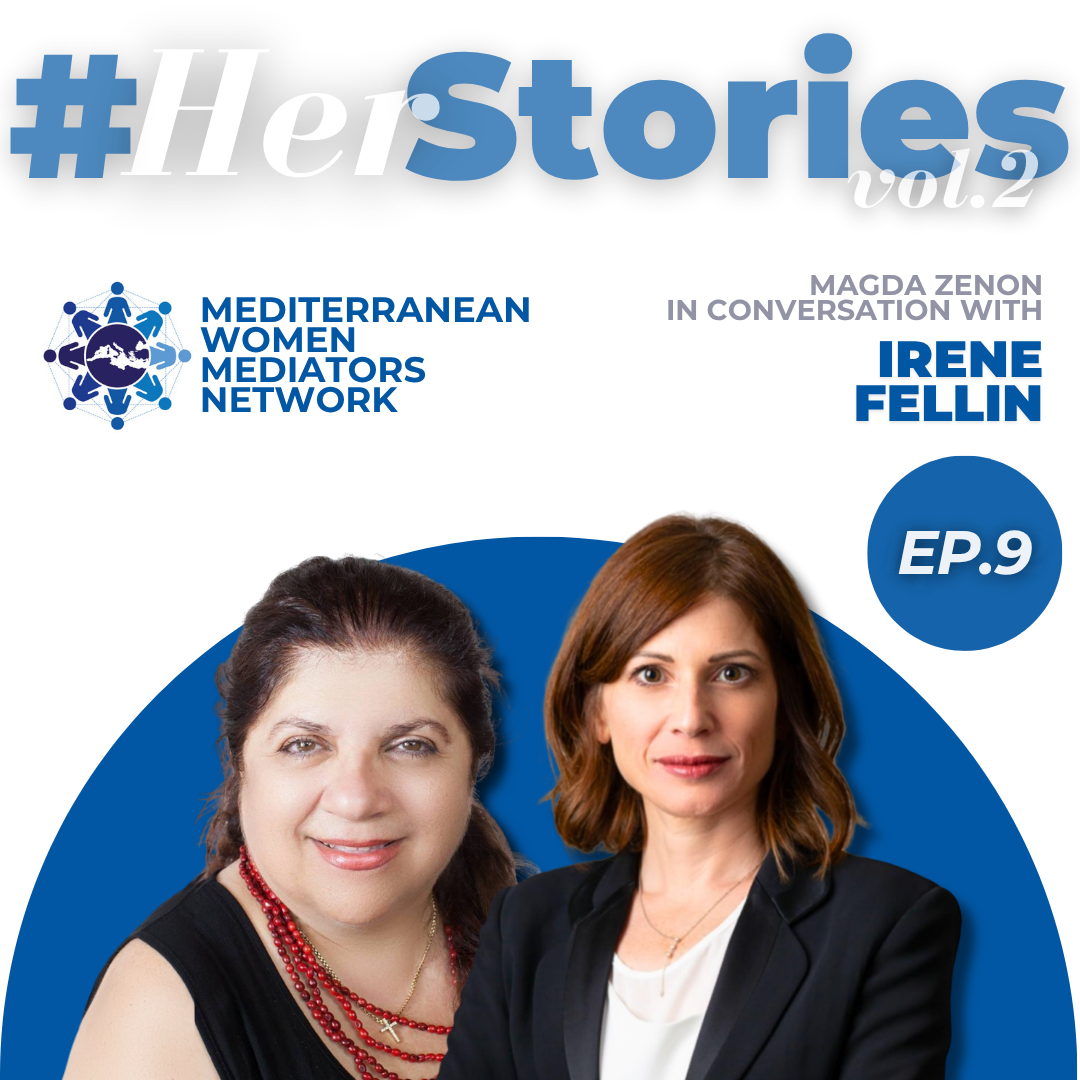
Vol. 2 – Episode 9 – Women, Peace and Security: from civil society to NATO
In the ninth episode of the #HerStories2 podcast series, Irene Fellin, NATO Secretary General’s Special Representative for Women, Peace and Security and instrumental in the creation and development of the Mediterranean Women Mediators Network, reflects on her path from cultural diplomacy to mediation and international security. As founder of Women in International Security Italy, she also looks back at the development of MWMN as a network grounded in the expertise of women working across the Mediterranean.
Irene discusses how the Network emerged in a region directly affected by conflict and instability. Its purpose was not simply to increase the number of women involved in high-level mediation, but to recognise the knowledge already present within communities. She also reflects on MWMN’s connection with other regional networks through the Global Alliance of Women Mediators Networks, which has created new opportunities for exchange and solidarity.
The conversation further explores Irene’s work at NATO and the importance of understanding security beyond borders and military outcomes. Drawing on a project supporting women in Ukraine’s armed forces, she explains how access to properly fitted uniforms and protective equipment directly affects their safety and effectiveness. Irene also stresses that the Women, Peace and Security agenda originated in civil society and must remain connected to it, ensuring that lived experiences of insecurity reach institutional discussions and decision-makers.

Vol. 2 – Episode 2: Pnina Sharvit Baruch – Women’s leadership, negotiation and inclusive peace processes
In the second episode of the #HerStories2 podcast series, Pnina Sharvit Baruch shares insights from her experience as a mediator, researcher and expert in international law and security affairs. Drawing on her involvement in peace negotiations and mediation initiatives, she reflects on the complexities of dialogue and conflict resolution in highly contested environments.
She discusses the challenges of navigating traditionally male-dominated negotiation and security spaces, highlighting the importance of ensuring women’s meaningful participation in peace and security processes. Reflecting on her own professional journey, Pnina also explores the value of building alliances among women and strengthening their role in decision-making.
She further reflects on the human dimension of conflict and mediation, emphasizing the importance of maintaining dialogue and fostering trust in times of deep polarization, while sharing her perspective on the role of women mediators in peacebuilding, conflict resolution and inclusive peace processes.
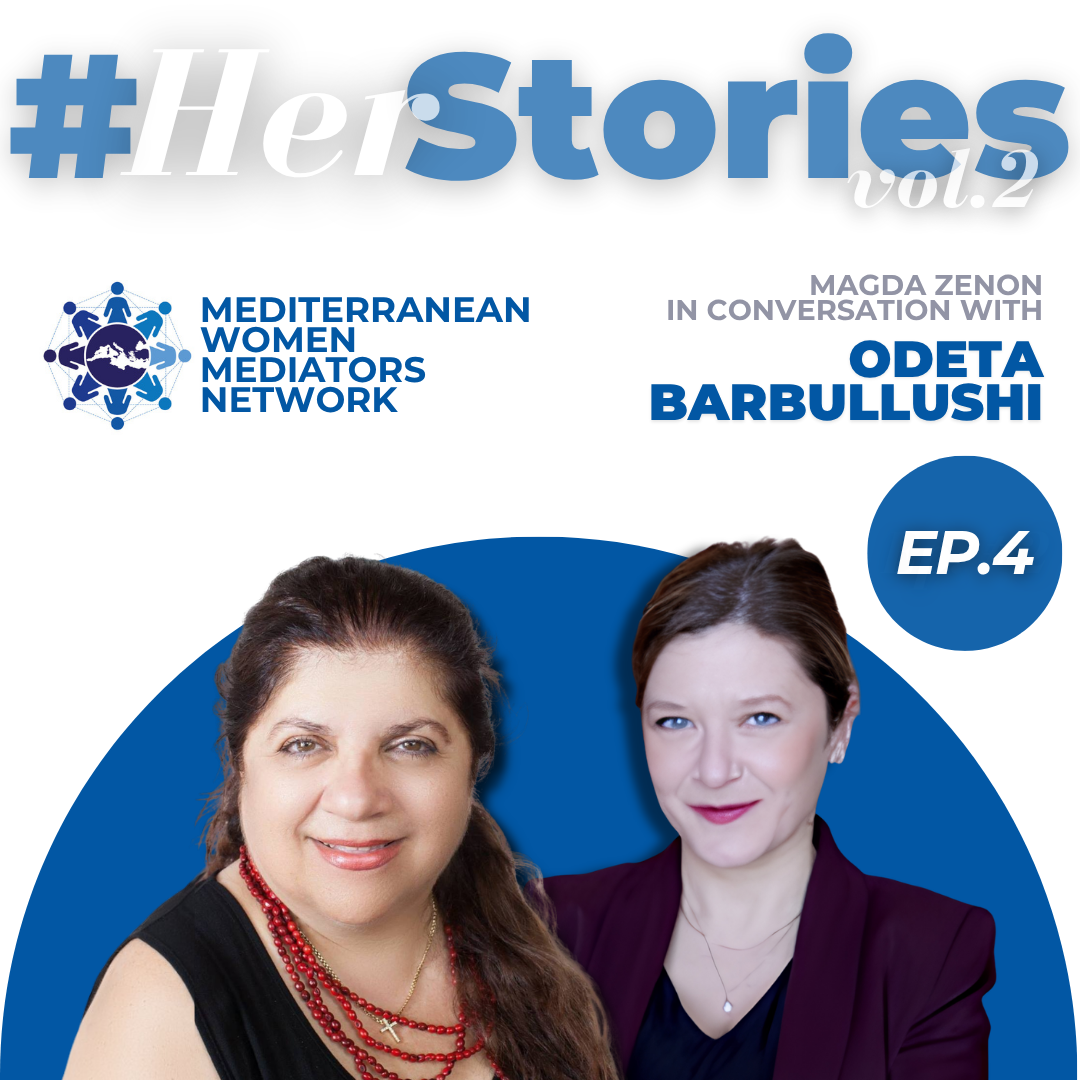
Vol. 2 – Episode 4: Odeta Barbullushi – Women, security and European integration
In the fourth episode of the #HerStories2 podcast series, Odeta Barbullushi, foreign policy expert, former Deputy Minister for Europe and Foreign Affairs of Albania and former Sherpa to the Albanian Prime Minister, reflects on the evolving relationship between the European Union and the Western Balkans. Drawing on her experience in diplomacy and regional cooperation, she explores how security is reshaping the EU enlargement process and the region’s place within Europe.
She discusses Albania’s contribution to European security and regional cooperation, reflecting on the country’s role in addressing shared challenges. Looking beyond geopolitics, Odeta also highlights the importance of resilient institutions, regional partnerships and a broader understanding of security.
She further reflects on the role of women in diplomacy and negotiation, highlighting the value of bringing a gender perspective into decision-making. Drawing on her experience at the negotiating table, she explains how considering the impact of agreements on individuals and communities can lead to more inclusive and effective diplomacy.
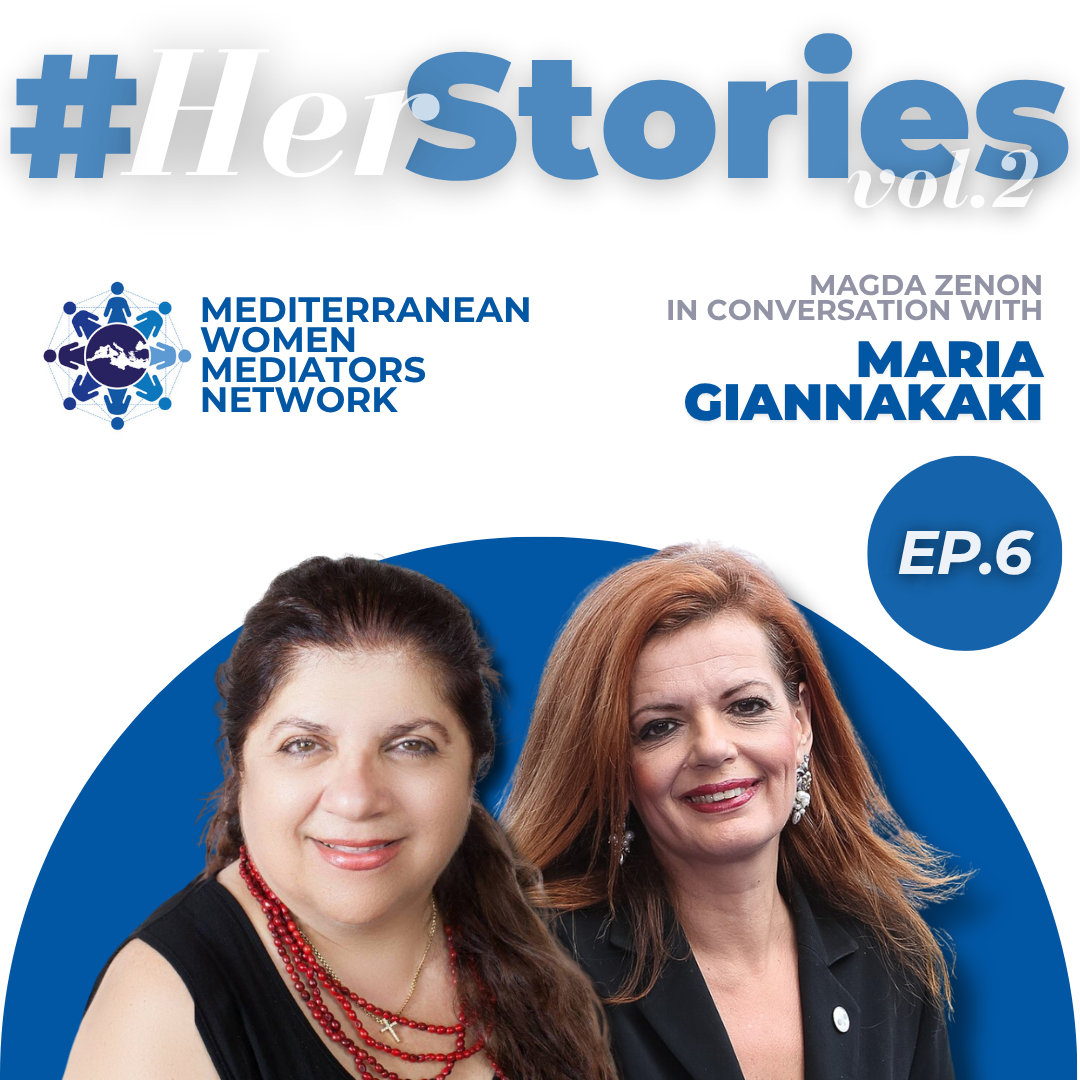
Vol. 2 – Episode 6: Maria Giannakaki – Dialogue, cohesion and belonging in Greece
In the sixth episode of the #HerStories2 podcast series, Maria Giannakaki, former Secretary General for Human Rights of Greece, former Member of the Hellenic Parliament and member of the Mediterranean Women Mediators Network, reflects on the role of mediation in addressing some of today’s most pressing challenges, from migration and social polarisation to the Cyprus peace process. Drawing on her experience in politics, human rights and conflict resolution, she explores how dialogue can help address the divisions that continue to shape societies long after violence has ended.
Drawing on her work with Greek and Turkish Cypriot communities, refugee women during the 2015 migration crisis and local communities navigating the challenges of integration, Maria discusses the role of mediation in building trust and strengthening social cohesion. She reflects on the importance of challenging stereotypes, fostering dialogue and supporting peaceful coexistence across divided communities.
The conversation further explores the role of women in peace processes and the importance of bringing a gender perspective into mediation. Reflecting on her experience, Maria argues that representation alone is not enough and highlights why peace agreements must take into account the different ways conflict affects women and men in order to achieve lasting peace.
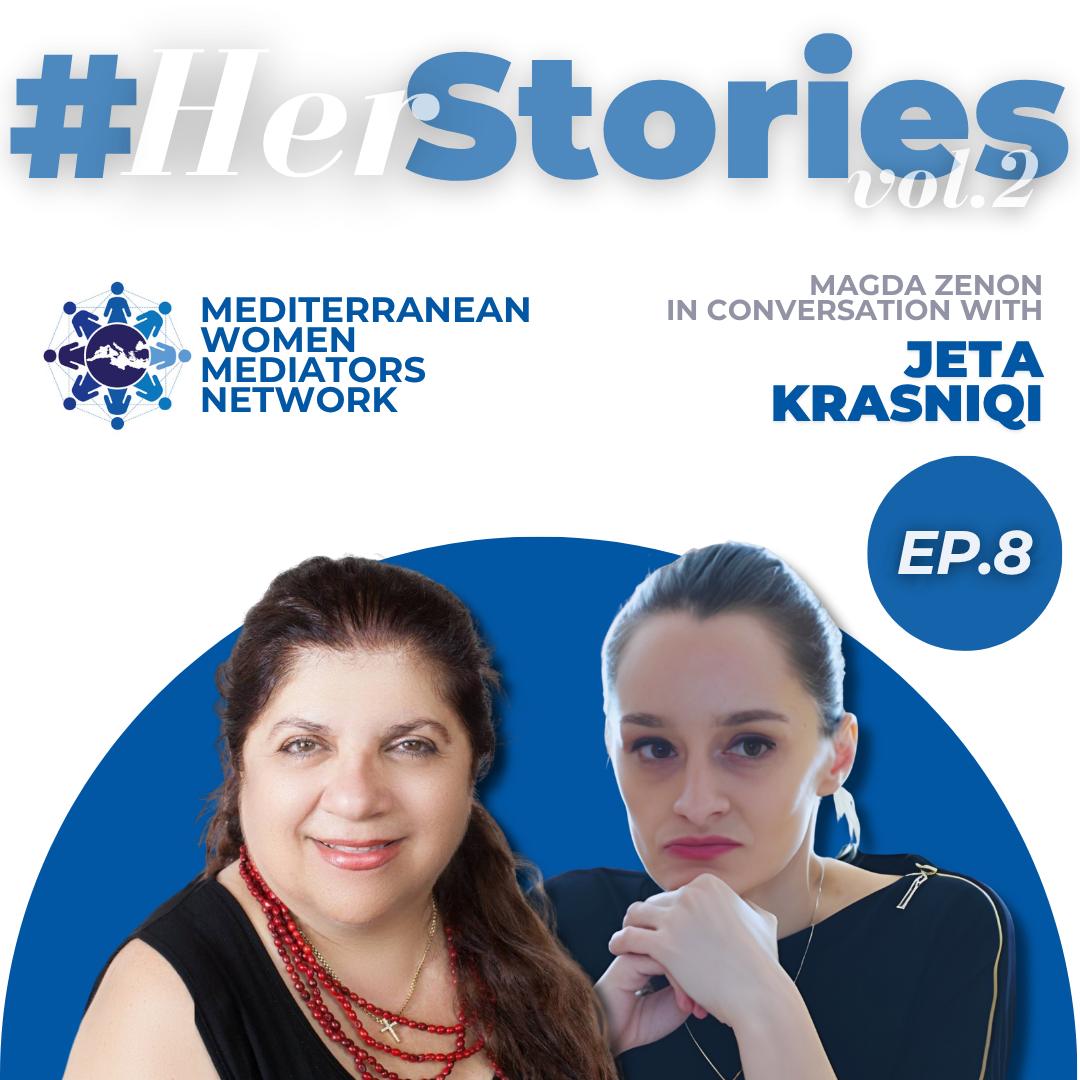
Vol. 2 – Episode 8: Jeta Krasniqi – The Kosovo–Serbia dialogue, gender inclusion and reconciliation
In the eighth episode of the #HerStories2 podcast series, Jeta Krasniqi, Kosovar expert, consultant to the Government of Kosovo on the EU-facilitated Kosovo–Serbia dialogue and member of the Mediterranean Women Mediators Network, reflects on the challenges of building sustainable peace more than 25 years after the war in Kosovo. Drawing on her direct involvement in the dialogue, she discusses a relationship that remains unresolved and the need to confront the legacies of the conflict to move towards meaningful reconciliation.
Jeta also explores how these unresolved legacies continue to affect younger generations, who may have no direct memory of the war but remain exposed to narratives that portray the other as an enemy. She reflects on the structure of the EU-facilitated dialogue and how the design of negotiations can determine which issues reach the table, including missing persons, reparations and conflict-related sexual violence.
The conversation further examines gender inclusion in peace processes. Jeta argues that women’s presence alone does not make a negotiation gender-sensitive, and that gender perspectives need to be embedded in the design of the process itself. Drawing on more than a decade of work addressing conflict-related sexual violence in Kosovo, she reflects on the struggle for survivors to receive recognition, reparations and access to justice, and on the role of women’s civil society in advancing this process.